You can wear PPE every single day and still get injured if you’re using it incorrectly. Most workplace PPE failures happen because workers choose the wrong equipment, wear it improperly, or skip basic inspections — not because PPE wasn’t available at all.
According to the U.S. Bureau of Labor Statistics, nearly 70% of workers who experienced eye injuries were either not wearing eye protection or wearing the wrong type for their task. That’s not a supply problem. That’s a knowledge and habits problem.
This guide covers the most common PPE mistakes workers make across industries — from construction sites in the UAE to warehouses and manufacturing floors — so supervisors and workers alike can catch these errors before they turn into real injuries.
What Is the Most Common PPE Mistake Workers Make?
The most common PPE mistake is wearing the wrong type of PPE for the specific hazard present. Workers often grab the nearest available glove, helmet, or respirator without checking whether it matches the risk level or task requirements.
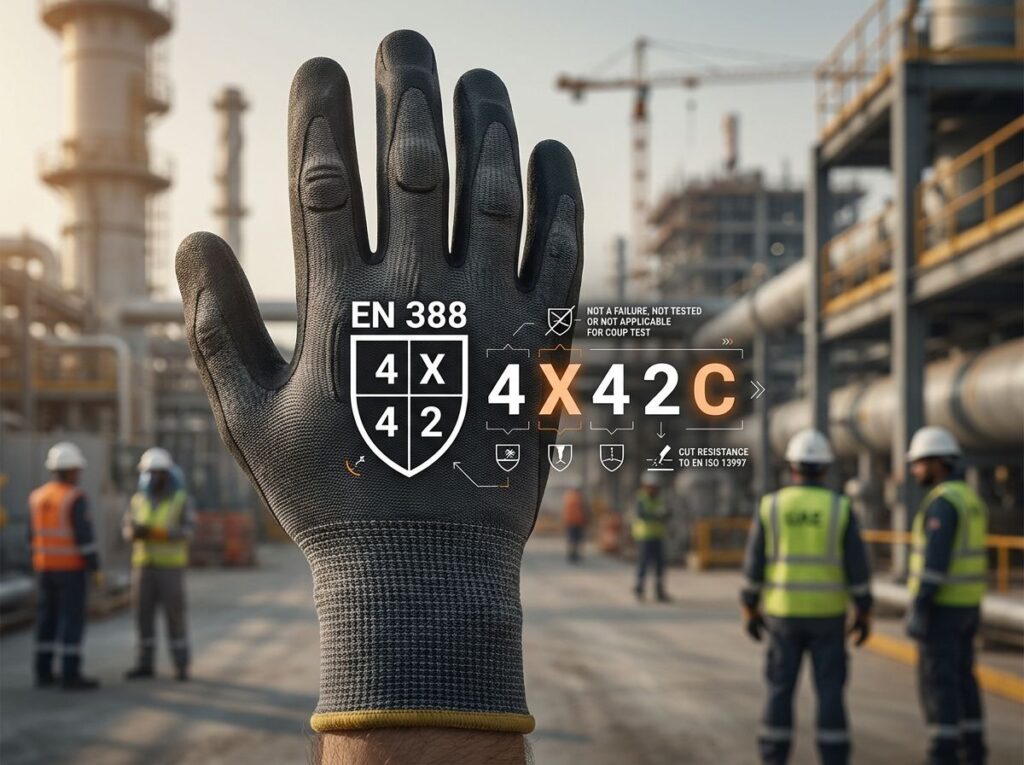
For example, a chemical-resistant glove rated for splash protection offers no cut resistance. A dust mask (N95) does not protect against organic vapors or welding fumes. Using the wrong equipment creates a false sense of safety, which can be more dangerous than wearing nothing at all.
OSHA’s PPE standard requires employers to conduct a hazard assessment before selecting protective equipment. That step is frequently skipped, which is why improper PPE selection remains the leading source of workplace injuries connected to protective equipment failure.
Key signs of wrong PPE selection:
- Respirator not rated for the chemical in use
- Gloves chosen by color or availability, not material compatibility
- Safety footwear without the right toe protection rating for the load type
- High-visibility vest worn in areas with no vehicle movement (misallocation, not misuse)
Not sure which glove or respirator is right for your hazard? Browse SafeGear’s full PPE range to find equipment matched to your specific worksite risks.
Why Do Workers Refuse to Wear PPE on Job Sites?
Workers avoid PPE for several practical reasons that go beyond attitude. The most common include discomfort, poor fit, reduced dexterity, and lack of training on why the equipment matters.
A study published in the Journal of Safety Research (2022) found that 58% of workers cited discomfort as the primary reason for not consistently using PPE. Ill-fitting helmets, gloves that are too large, and respirators that make breathing difficult are among the top complaints.
In high-temperature environments — such as outdoor construction sites in the UAE where summer temperatures regularly exceed 45°C — wearing full PPE feels physically demanding. Workers often remove equipment during brief rest periods and forget to put it back on.
Common behavioral reasons for PPE non-compliance:
- Workers believe the task is too short to justify putting on PPE
- Lack of visible enforcement from supervisors
- PPE stored far from the work area
- Poorly maintained equipment that is uncomfortable to wear
- No training on the real consequences of not wearing it
Addressing these issues requires more than signs and reminders. Supervisors need to model correct behavior, and PPE must be accessible, properly sized, and maintained in good condition.
How Incorrect PPE Fit Leads to Workplace Injuries
PPE that doesn’t fit properly offers significantly reduced protection. This is one of the most overlooked PPE errors in the workplace, particularly for female workers and those with non-standard body types who are often issued equipment designed for average male measurements.
A hard hat worn too loosely can shift during impact and miss the point of contact. A safety harness that isn’t adjusted to the wearer’s torso length can allow dangerous slack during a fall. According to the National Institute for Occupational Safety and Health (NIOSH), fall protection equipment that is improperly fitted is responsible for a measurable share of fall-related fatalities each year.
PPE fit errors to watch for:
| Equipment | Common Fit Mistake | Result |
| Hard hat | Too loose or incorrect suspension setting | Reduced impact absorption |
| escape hood | Face seal not checked | Contaminated air enters |
| Safety harness | Leg straps too loose | Fall forces shift dangerously |
| Safety gloves | Too large | Loss of grip, increased snagging risk |
| Safety footwear | Wrong width or size | Foot fatigue, reduced stability |
Every item of PPE should be fitted individually before use — not issued in one standard size for an entire team.
What Are the Dangers of Not Maintaining PPE Properly?
Damaged or poorly maintained PPE can fail at the exact moment it’s needed. This is one of the most serious PPE negligence mistakes in any workplace.
Helmets that have absorbed a previous impact may look undamaged on the surface but have internal cracks that reduce their protective capacity by up to 50%. Safety glasses with scratched lenses reduce visibility and no longer meet the impact resistance rating they were certified for. According to ANSI/ISEA Z87.1 standards, PPE must meet specific performance benchmarks — standards that damaged equipment can no longer meet.
Signs that PPE needs to be replaced immediately:
- Visible cracks, tears, or deformation
- Elastic or straps that no longer hold tension
- Lenses with deep scratches or chemical staining
- Respirator filters past their service life or exposure limit
- Footwear with sole separation or crushed toe caps
A simple inspection checklist before each shift can catch most of these issues before they become a safety failure. If your team is due for replacements, don’t wait until the next incident — every shift starts with equipment that either protects or fails. Shop certified replacement PPE at SafeGear.ae across helmets, respirators, safety glasses, gloves, and footwear — all meeting current EN and ANSI safety standards.
What Is Improper PPE Selection and Why Does It Happen?
Improper PPE selection happens when purchasing decisions are made based on cost or availability rather than hazard assessment. This is a systemic mistake that affects entire job sites, not just individual workers.
EN and ANSI standards classify PPE into performance categories. A Level A chemical suit, for example, provides full vapor protection, while a Level D suit offers minimal splash resistance. Selecting Level D for a Level A environment exposes workers to severe chemical risk.
The same principle applies across categories. Cut-resistant gloves are rated A1 through A9 under ANSI/ISEA 105-2016. A worker handling sheet metal with A2 gloves when A6 is required faces a real risk of deep laceration.
The correct PPE selection process:
- Identify all hazards present at the worksite
- Match each hazard to the relevant PPE standard (EN, ANSI, OSHA)
- Select equipment that meets or exceeds the required performance rating
- Confirm sizing and fit before issuing to workers
- Document the selection rationale for compliance records
Skipping any of these steps increases liability and injury risk simultaneously.
Why Is Training on PPE Usage Still Widely Neglected?
PPE training is legally required in most jurisdictions but remains inconsistently delivered in practice. Workers are often handed equipment with no explanation of how to wear it, when to use it, or when to replace it.
OSHA standard 1910.132(f) requires employers to train workers to know when PPE is necessary, which type to use, and how to properly put it on, adjust, and remove it. Despite this, a 2021 survey by the National Safety Council found that nearly 40% of workers reported never receiving formal PPE training.
Training gaps are particularly common in the following areas:
- Donning and doffing order — putting on and removing PPE in the wrong sequence can expose workers to hazardous substances
- Respirator fit testing — required annually for tight-fitting respirators but frequently skipped
- Glove removal technique — incorrect removal can transfer contaminants to bare skin
- Inspection before use — most workers are not taught what a damaged piece of PPE looks like
Training should be hands-on, in the worker’s primary language, and refreshed whenever new equipment is introduced or a job task changes.
Conclusion
PPE mistakes are preventable. Most workplace injuries linked to protective equipment trace back to three core problems — wrong selection, poor fit, and lack of training. Fixing these issues doesn’t require major investment, but it does require consistency.
Employers and safety officers should treat PPE as a system, not just a product. The right equipment, fitted correctly, maintained properly, and supported by real training is what actually keeps workers safe.
Ready to get the right PPE for your team? SafeGear supplies certified personal protective equipment across the UAE — helmets, gloves, respirators, safety footwear, high-visibility workwear, and more. Every product meets current EN and ANSI standards, so you can put your workers in gear that actually protects them.
Browse PPE at SafeGear.ae for expert guidance on selecting the right equipment for your worksite hazards.
Frequently Asked Questions
What is the most common PPE mistakes workers make on construction sites?
The most common mistake on construction sites is wearing PPE that isn’t rated for the specific hazard – such as using a standard dust mask in environments with chemical vapors, or wearing low-cut safety shoes where ankle protection is required.
Can wearing the wrong PPE be worse than wearing none?
Yes. Wearing incorrect PPE creates a false sense of protection. Workers with inappropriate equipment often take risks they would otherwise avoid, increasing exposure to the actual hazard.
How often should PPE be inspected?
PPE should be visually inspected before each use. Formal inspection logs are recommended weekly for shared equipment. Any item that shows signs of damage should be removed from service immediately.
What is PPE non-compliance, and how can it be reduced?
PPE non-compliance means workers are not using protective equipment as required. It is reduced through better training, accessible storage, supervisor enforcement, properly fitted equipment, and addressing discomfort issues directly.
Is there a standard for selecting PPE in the UAE?
Yes. The UAE follows international standards, including EN ISO standards and OSHA guidelines for PPE selection. Employers are required to conduct risk assessments and select PPE accordingly before workers begin any task involving identified hazards.