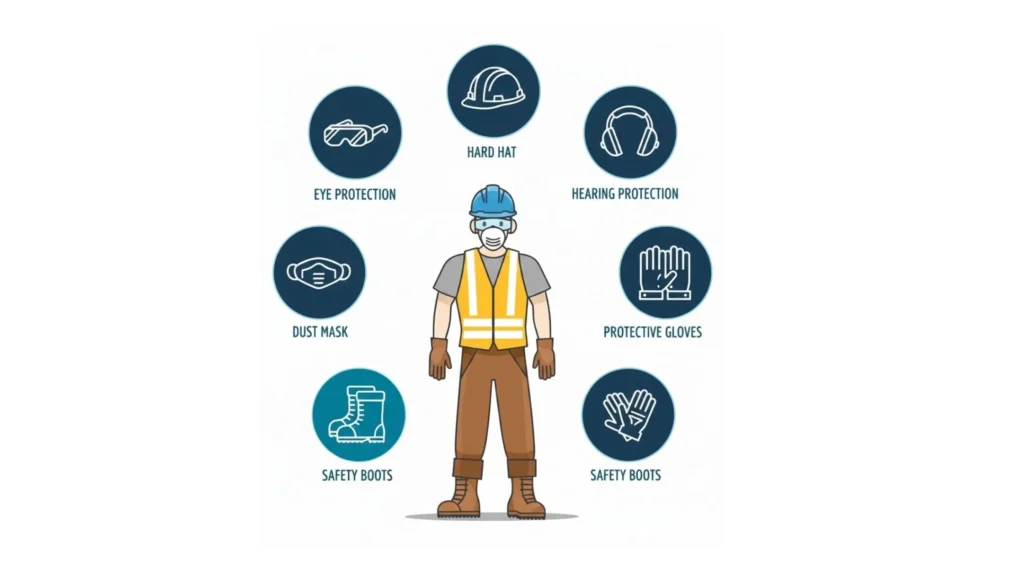
Safety shoes are a critical component of Personal Protective Equipment (PPE) in the UAE. To ensure worker safety, these shoes must follow strict international standards and local labor regulations.
What are the rules for safety shoes?
The primary rules for safety shoes in the UAE require that all protective footwear must:
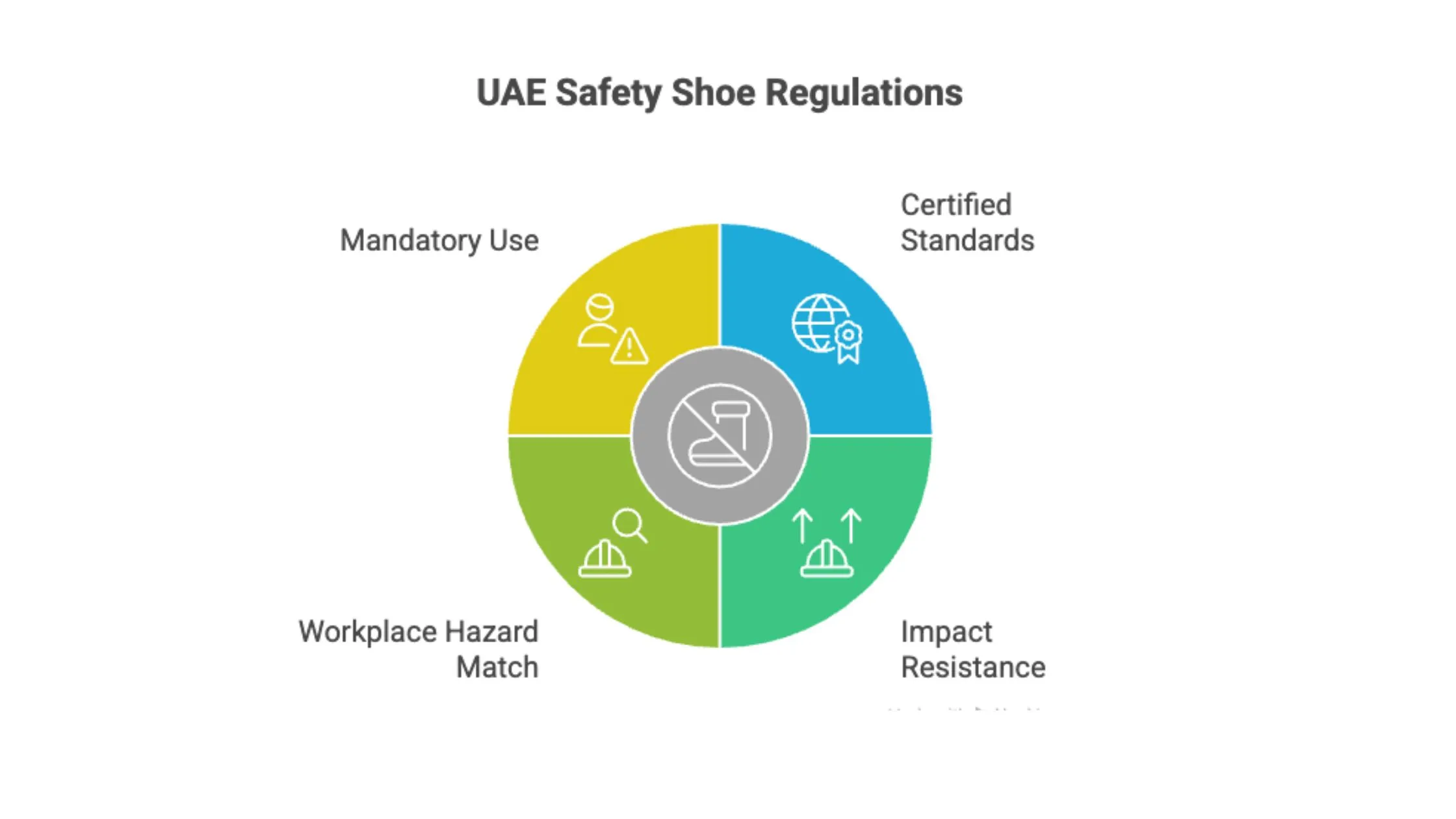
- Meet Certified Standards: Be certified under EN ISO 20345 or ASTM F2413.
- Provide Impact Resistance: Feature a protective toe cap capable of resisting at least 200 Joules of energy.
- Match the Workplace Hazard: Include specific protections such as slip resistance, puncture-proof midsoles, or anti-static properties.
- Be Mandatory: Employers must provide them, and workers must wear them at all times in designated hazardous zones.
1. Official Safety Standards in the UAE
In the UAE, safety shoes are governed by international benchmarks recognized by bodies like OSHAD and Dubai Municipality. Your footwear must feature one of the following certifications:
EN ISO 20345 (The European Standard)
This is the most common standard in the Gulf region. When checking your boots, look for these specific rating codes:
| Rating | Protection Level | Best Environment |
| SB | Basic 200J Toe Protection | General Labor |
| S1 | Toe Protection + Anti-static + Energy Absorption | Dry Workspaces |
| S2 | Same as S1 + Water Resistance | Outdoor/Wet Areas |
| S3 | Same as S2 + Puncture Resistant Midsole | Construction & Mining |
Related Blog: The Ultimate Review: Puma Safety Shoes S3 vs S1P for UAE Workers
ASTM F2413 (The American Standard)
Commonly used in the UAE Oil & Gas sector, this standard focuses on impact (I), compression (C), and electrical hazard (EH) resistance.
2. When is it Mandatory to Wear Safety Shoes?
According to UAE Occupational Health and Safety guidelines, safety footwear is required whenever the following risks are present:
- Crush Hazards: Working with heavy tools, machinery, or falling objects.
- Piercing Hazards: Presence of sharp objects like nails or scrap metal on the floor.
- Liquid Hazards: Walking on slippery, oily, or chemically treated surfaces.
- Electrical/Heat Hazards: Working near live wires or high-temperature surfaces (e.g., asphalt or foundries).
Note: In industries like Construction, Warehousing, and Manufacturing, wearing safety shoes is a legal requirement under UAE Labor Law.
3. Prohibited Footwear: What is Not Allowed?
To maintain a safe site, certain footwear is strictly banned from UAE worksites. If a worker wears these, they are in violation of safety rules:
- Sandals and Flip-flops: Offer zero protection against impact or chemicals.
- Sneakers/Running Shoes: Lack reinforced toe caps and puncture resistance.
- High-heels or Dress Shoes: Provide no grip and increase the risk of ankle injuries.
- Worn-out PPE: Shoes with cracked toe caps or smoothed-out soles must be replaced immediately.
4. Key Rules for Workers & Employers
To stay compliant and safe, follow these five essential rules:
- Verify the Label: Always check the tongue or side of the boot for the CE mark, EN ISO 20345, or ASTM stamp.
- Proper Fit: Safety shoes should not be “broken in.” They must fit comfortably from day one to prevent blisters and fatigue.
- Daily Inspection: Workers should check for exposed metal in the toe cap or detached soles before every shift.
- Employer Responsibility: Under UAE law, employers are generally responsible for providing appropriate PPE to their staff.
- Cleanliness: Mud and chemicals can degrade the materials. Clean your boots regularly to extend their lifespan.
Conclusion: Safety Starts from the Ground Up
Following the rules for safety shoes isn’t just about avoiding fines—it’s about ensuring every worker returns home safely. By choosing certified footwear (S1-S3) and maintaining it properly, you protect yourself from the most common workplace injuries in the UAE.