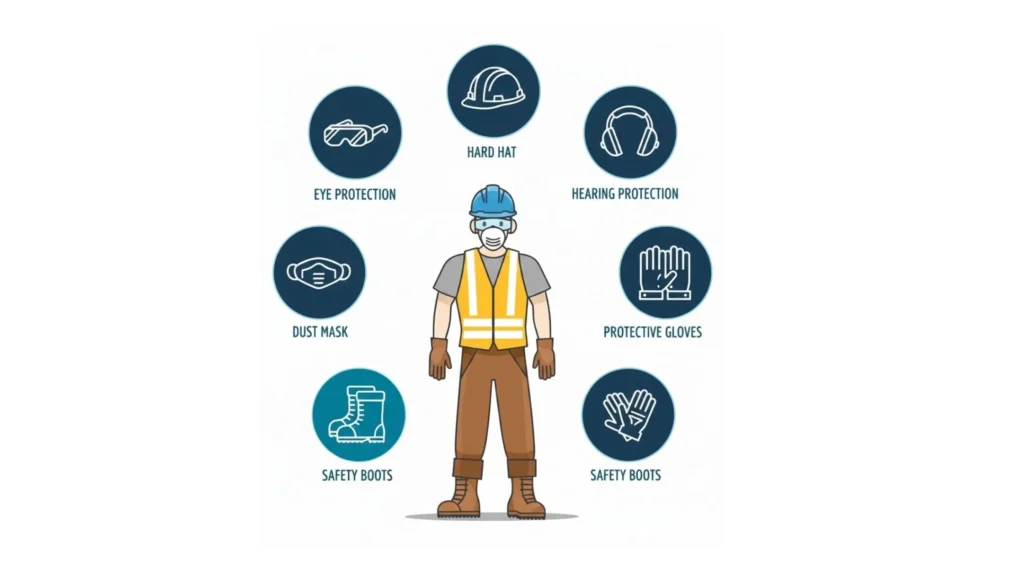
Personal Protective Equipment (PPE) is used to keep workers safe from injuries and health risks at work.
But wearing PPE alone is not enough. PPE must be used correctly to give full protection.
That’s why safety experts follow 6 basic rules of PPE.
This guide explains the 6 rules of PPE in very simple words, especially for UAE workplaces like construction sites, factories, warehouses, and industrial jobs.
What Is PPE?
PPE (Personal Protective Equipment) means safety items worn to protect the body from injury or illness.
Examples:
- Safety helmets
- Safety shoes
- Gloves
- Face masks
- Safety goggles
- Reflective jackets
According to international safety standards such as those published by the Occupational Safety and Health Administration (OSHA), PPE must always match the specific hazards present in the workplace.
What Are the 6 Rules of PPE?
The 6 rules of PPE explain how PPE should be:
- Selected
- Worn
- Maintained
- Replaced
PPE includes many items such as helmets, gloves, safety shoes, masks, and eye protection. Understanding the different types of ppe helps workers choose the correct protection for each task.
Following these rules helps reduce accidents and improve workplace safety.
Rule 1: PPE Must Be Right for the Job
This rule means different jobs need different PPE.
Not all PPE protects against every type of danger. The PPE you wear must match the specific risk of the work.
Along with selecting the correct PPE for each job, it is equally important to choose right safety equipment supplier to ensure the products meet quality and safety standards.
Why this rule matters
Every job has different hazards such as:
- Falling objects
- Sharp tools
- Heat and sparks
- Dust and harmful particles
- Chemicals
Using the wrong PPE can:
- Give a false feeling of safety
- Increase the chance of injury
- Lead to serious accidents
Examples
- Construction work– Helmet, safety shoes, gloves, reflective vest
- Welding work– Welding face shield, heat-resistant gloves
- Dusty areas– Mask or respirator
- Chemical handling– Chemical-resistant gloves, goggles, face shield
Wearing PPE that does not match the job is dangerous.
Rule 2: PPE Must Fit the User Properly
PPE should fit the worker’s body correctly.
PPE that is too loose or too tight cannot protect properly.
Problems with poor fit
- Loose helmets can fall off
- Tight gloves reduce movement
- Oversized shoes cause slipping
- Small masks allow dust to enter
Why fit is important
- Better comfort
- Better protection
- Less chance of accidents
PPE should be selected based on size, shape, and comfort of the user.
Rule 3: PPE Must Be Worn Correctly at All Times
PPE only protects when it is worn the right way.
Many accidents happen because PPE is:
- Worn incorrectly
- Removed during work
- Not fastened properly
Common mistakes
- Helmet strap not closed
- Mask worn below the nose
- Gloves removed for “quick work”
PPE should be worn from the beginning to the end of the task, without shortcuts.
Rule 4: PPE Must Be Kept Clean and in Good Condition
Damaged or dirty PPE does not protect properly.
Before using PPE, it should be checked carefully.
Look for:
- Cracks in helmets
- Torn gloves
- Broken straps
- Scratched goggles
- Expired masks or filters
Why this rule is important
- Cracked PPE can fail suddenly
- Dirty PPE can cause health problems
- Worn-out PPE increases injury risk
PPE should always be clean, safe, and ready to use.
Rule 5: PPE Must Be Used Only for Its Intended Purpose
PPE is designed only for safety, not for convenience or other uses.
What NOT to do
- Do not sit on helmets
- Do not use gloves as cleaning cloths
- Do not modify PPE
- Do not remove safety parts
Why this matters
Using PPE incorrectly can:
- Damage it
- Reduce protection
- Cause accidents later
PPE should be used only the way it was designed to be used.
Rule 6: PPE Must Be Replaced When Needed
PPE does not last forever.
Over time, PPE becomes:
- Weak
- Damaged
- Expired
- Uncomfortable
PPE should be replaced when:
- It is cracked or torn
- It no longer fits properly
- It has passed its expiry date
- It cannot be repaired safely
Examples
- Old safety shoes lose grip
- Expired masks stop filtering dust
- Stretched helmet straps fail to hold
Using old PPE is almost the same as using no PPE at all.
Why the 6 Rules of PPE Are Important in the UAE
In the UAE:
- Many industries involve high-risk work
- Safety inspections are strict
- Employers are responsible for worker safety
Following the 6 PPE rules helps:
- Prevent workplace accidents
- Protect workers’ health
- Improve safety culture
- Avoid legal and compliance issues
Key Takeaways: The 6 Rules of PPE
- PPE protects workers only when it is chosen and used correctly.
- Different jobs have different risks, so PPE must match the type of work.
- PPE that does not fit properly can be uncomfortable and unsafe.
- Wearing PPE the wrong way or removing it during work reduces protection.
- Damaged or dirty PPE should never be used.
- PPE must be used only for safety, not for other purposes.
- Old, expired, or worn-out PPE should be replaced immediately.
- Following the 6 PPE rules helps prevent accidents and injuries.
- These rules are especially important in high-risk UAE workplaces like construction and industrial sites.
- PPE safety is not optional — it is a daily habit and responsibility
Many UAE businesses depend on a reliable ppe supplier in dubai to ensure workers receive certified and job-specific protective equipment that follows local safety requirements.
Final Thoughts
The 6 rules of PPE are simple but powerful.
When these rules are followed, PPE becomes a real safety shield, not just a uniform.
Workplace safety starts with correct PPE usage, every day, on every job.