Personal protective equipment loses its protective ability over time, even without visible damage. A PPE lifespan guide helps workers and safety officers know when gear has reached the end of its usable life. Material aging, UV exposure, impacts, and storage conditions all shorten how long PPE stays safe to use. This guide covers helmet lifespan rules, replacement signs across major PPE categories, and how to store equipment correctly.
What Is the Average Lifespan of PPE?
PPE lifespan depends on the equipment type, material, and how often it gets used. Hard hat shells typically last 5 years from the manufacture date, while the suspension inside needs replacing every 12 months. Disposable gloves and masks are designed for single-use only. Reusable chemical-resistant gloves last 3 to 12 months depending on the chemicals they contact. Safety glasses commonly last up to 3 years before lens clarity drops enough to affect vision. Full-body harnesses carry a typical service life of around 5 years, per manufacturer guidance referenced in industry safety publications from 2025.
No single number applies to every item. A helmet stored indoors away from sunlight can outlast one used daily on an outdoor construction site by several years. Heat, UV radiation, and chemical exposure all accelerate material breakdown. The Occupational Safety and Health Administration (OSHA) requires employers to inspect, maintain, and replace PPE under 29 CFR 1910.132 whenever equipment shows damage or reaches the end of its service life. The safest approach tracks the manufacture date stamped on the gear and pairs it with a visual inspection before every shift. Whichever limit arrives first should trigger replacement.
When Should You Replace PPE? (Key Warning Signs)
PPE should be replaced the moment it shows physical damage, contamination, or has passed its manufacturer-recommended service life. Waiting until the equipment completely fails removes the safety margin it was designed to provide.
Watch for these signs across most PPE categories:
- Cracks, dents, or brittleness in helmet shells or eyewear lenses
- Frayed straps, loose stitching, or stretched elastic on harnesses and vests
- Faded or patchy reflective tape on high-visibility clothing
- Torn, punctured, or stiff gloves that no longer fit snugly
- A cracked seal, bent strap, or expired filter cartridge on a respirator
- Discoloration or a chalky texture on plastic components, which signals UV degradation
- Any equipment involved in a fall, impact, or chemical spill, even without visible damage
A helmet that absorbs a significant impact should be retired immediately, even if the shell looks intact, since the internal foam liner compresses permanently and cannot protect the wearer a second time. Fall-protection gear works the same way: a harness or lanyard that has arrested a fall must be removed from service right away, as manufacturers state clearly in their product documentation.
How Long Do Safety Helmets Last?
Safety helmets typically last 5 years from the date of manufacture, regardless of how often they are worn. This figure comes from manufacturer guidance under both the ANSI/ISEA Z89.1 standard in the United States and the EN 397 standard used across Europe. Some manufacturers shorten this to 2 to 3 years for helmets used daily in harsh outdoor conditions.
The helmet shell and suspension age at different rates. The shell resists impact and penetration, while the suspension absorbs and spreads shock energy. Straps stretch and weaken with sweat and washing, so most guidelines recommend replacing the suspension every 12 months even when the shell still looks new.
Every certified helmet carries a date-of-manufacture stamp inside the shell. This stamp usually appears as a small clock-style symbol, with a center number showing the year and an arrow pointing to the month. Checking this stamp is the fastest way to confirm whether a helmet is still within its safe service window.
EN 397 testing covers impact absorption, penetration resistance, and flame resistance, with some models adding electrical insulation up to 440 volts AC. ANSI Z89.1 testing in the U.S. covers similar criteria and is referenced inside OSHA’s head protection regulation, 29 CFR 1910.135. A helmet missing its certification label or date stamp should not stay in use.
How to Choose the Best Safety Helmet
Choosing the best safety helmet starts with matching the certification to the actual job hazard. A helmet rated for falling objects is not automatically suitable for work at height or electrical environments.
- Confirm the certification standard. Look for ANSI Z89.1 marking for U.S. worksites or EN 397 marking for European and Gulf-region sites. Some jobs at height require EN 12492-certified climbing-style helmets instead.
- Match the helmet type to the hazard. Type 1 helmets protect against top-of-head impacts. Type 2 helmets add side, front, and back protection for environments with lateral hazard risk.
- Check for additional protection features. High-temperature, low-temperature, and electrical insulation ratings matter for specific industries like utilities, foundries, or cold-storage work.
- Verify the fit and suspension system. A helmet that shifts or sits loosely will not stay aligned during an impact. Ratchet-style suspensions allow finer adjustment than pin-lock systems.
- Check the interior label for manufacture date and markings. A helmet without a visible date stamp or certification mark should be avoided, since its remaining service life cannot be confirmed.
- Consider the work environment. Helmets used outdoors in high heat or strong sunlight need more frequent replacement than helmets used indoors.
PPE Replacement Guide: Lifespan by Equipment Type
Different PPE categories carry very different replacement timelines. The table below summarizes typical service life for common equipment types based on manufacturer and industry safety guidance from 2025.
| PPE Type | Typical Lifespan | Replace Immediately If |
| Hard hat / safety helmet shell | 5 years from manufacture date | Cracked, dented, or after any impact |
| Helmet suspension | 12 months | Stretched, torn, or loose |
| Safety glasses / goggles | Up to 3 years | Scratched, pitted, or fogged lenses |
| Disposable gloves | Single use | After each task or contact with contaminants |
| Reusable chemical gloves | 3–12 months | Torn, stiff, or discolored |
| General-purpose safety gloves | 6–12 months | Tears, punctures, worn grip, or loss of flexibility |
| Safety shoes/boots | 1–3 years | Sole separation, worn tread, exposed toe cap, or damaged upper |
| Safety garments/coveralls | 6–12 months | Tears, excessive wear, contamination, or faded protective properties |
| Respirator shell | Around 5 years | Cracked seal or damaged straps |
| Respirator filters/cartridges | 6–12 months | Increased breathing resistance or expiry date reached |
| Escape hood | 5–10 years (sealed, unopened) | Seal broken, expired shelf life, damaged packaging, or after use |
| High-visibility clothing | 6–12 months | Faded or patchy reflective tape |
| Full-body harness | Around 5 years | After arresting a fall, or frayed stitching |
| Lanyards and anchor straps | 3–5 years | Cuts, corrosion, or missing tags |
| Foam earplugs | Single use | After each use |
| Earmuff cushions | Replace when shape is lost | Cracked, hardened, or flattened padding |
These figures represent general industry guidance, not fixed legal deadlines. Manufacturer instructions printed on the product label always take priority.
What Happens If You Use Expired or Damaged PPE?
Using expired or damaged PPE significantly increases the risk of injury because the equipment can no longer absorb impact, block chemicals, or filter contaminants as designed. A cracked helmet shell transfers more force to the skull during impact, and a respirator with a saturated filter allows harmful particles to pass through without warning.
Material degradation often happens without visible signs. UV exposure breaks down plastic polymers at a molecular level, making a helmet shell brittle long before cracks appear on the surface. This invisible weakening is why date-based replacement schedules matter as much as visual inspection.
Workplace injuries linked to PPE failure also carry regulatory consequences, since employers who fail to maintain PPE under OSHA’s general industry standard risk citations and liability claims. Beyond compliance, expired PPE creates a false sense of security, since workers may take on higher-risk tasks believing they are protected when the gear has already failed internally.
How to Store PPE to Extend Its Lifespan
Proper storage extends PPE lifespan by slowing down the heat, UV, and moisture exposure that cause material breakdown. Helmets, harnesses, and respirators all benefit from controlled storage conditions between uses.
Follow these storage practices:
- Keep PPE away from direct sunlight, since UV rays degrade plastic and rubber the fastest
- Store gear in a cool, dry area to prevent mold growth on straps and padding
- Avoid stacking heavy objects on top of helmets, which can cause shell deformation
- Clean equipment with mild soap and water rather than harsh solvents that weaken materials
- Hang harnesses and lanyards instead of folding them tightly for long periods
- Keep respirator filters sealed in their original packaging until the day of use
A documented PPE inventory log helps track issue dates and replacement schedules, and becomes useful evidence of compliance during safety audits.
PPE Inspection Checklist: What to Check Before Every Shift
A quick PPE inspection checklist confirms gear is safe to use in under a minute, before any task begins. Run through this list at the start of every shift:
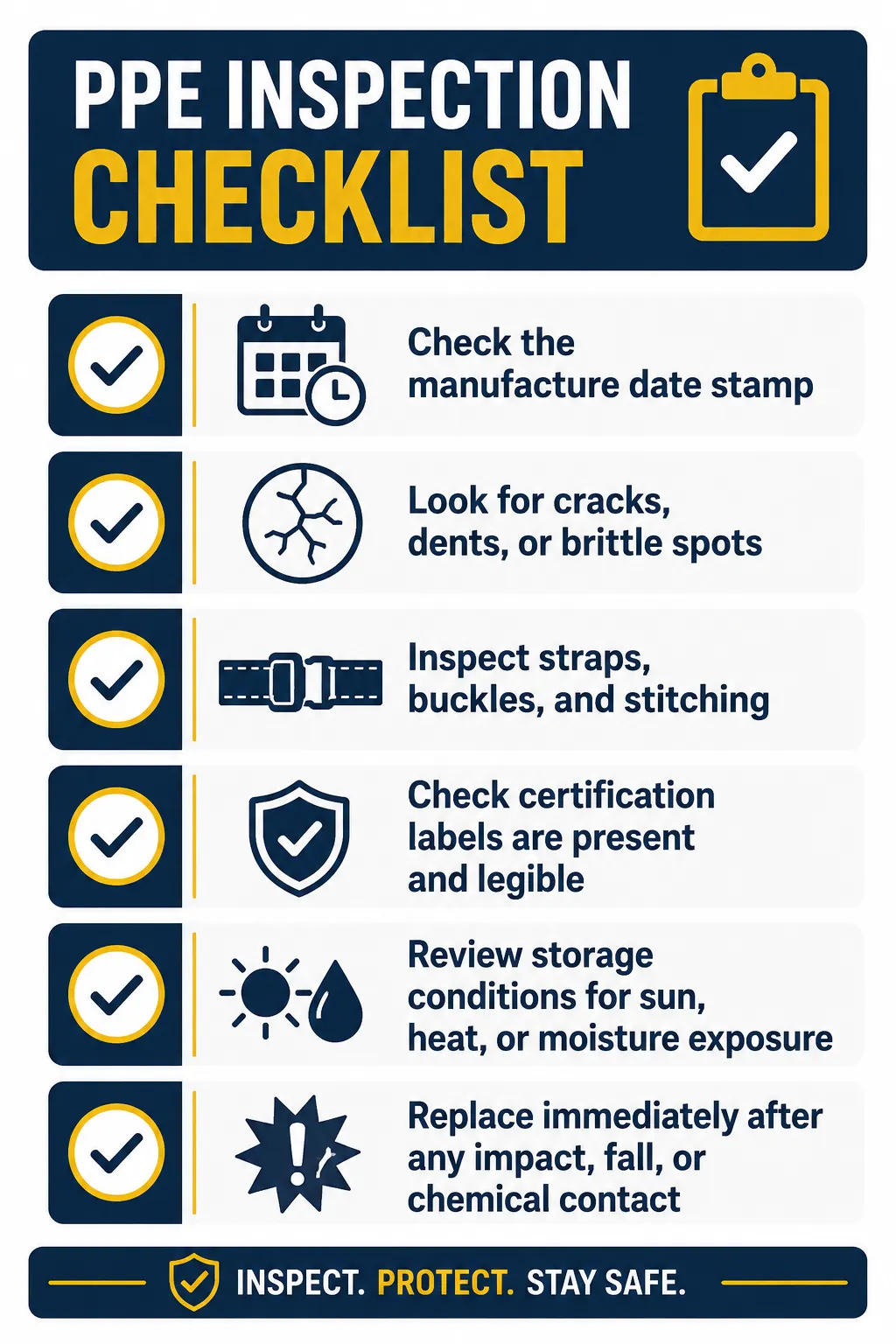
Keeping a printed or digital copy of this checklist near PPE storage areas turns inspection into a daily habit rather than an afterthought, and gives supervisors fast, audit-ready proof of compliance.
Conclusion
PPE only protects workers when it stays within its safe service life. Tracking manufacture dates, watching for physical wear, and following manufacturer replacement schedules together form a reliable PPE lifespan guide that any workplace can follow. For certified helmets, gloves, respirators, and other safety gear that meet current ANSI and EN standards, browse the full equipment range at SafeGear.
Frequently Asked Questions
How often should PPE be replaced?
Replacement frequency depends on the equipment type, ranging from single-use gloves to multi-year helmets and harnesses, with most categories falling between 6 months and 5 years.
Do safety helmets expire even without damage?
Yes, helmets reach the end of their service life around 5 years from the manufacture date due to material aging, even without visible damage.
Can a helmet be reused after a hard impact?
No, a helmet that has absorbed a significant impact must be replaced immediately, since the internal liner compresses permanently and loses its shock-absorbing ability.
What is the difference between ANSI and EN helmet standards?
ANSI Z89.1 is the U.S. standard for industrial head protection referenced by OSHA, while EN 397 is the European standard with similar impact and penetration requirements.
How do I find a helmet’s manufacture date?
Look for a clock-style stamp inside the shell, where the center number shows the year and an arrow points to the month of manufacture.