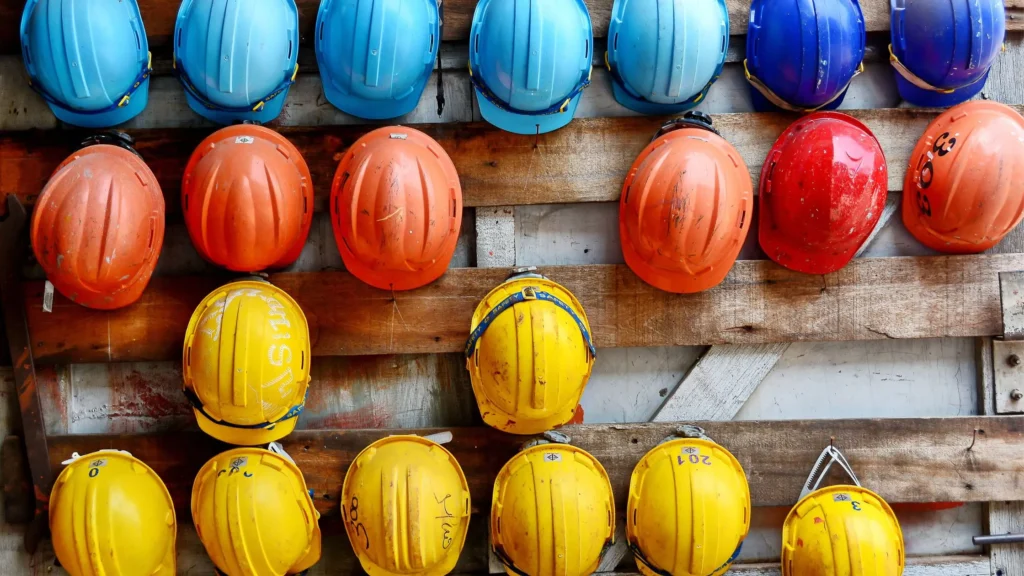
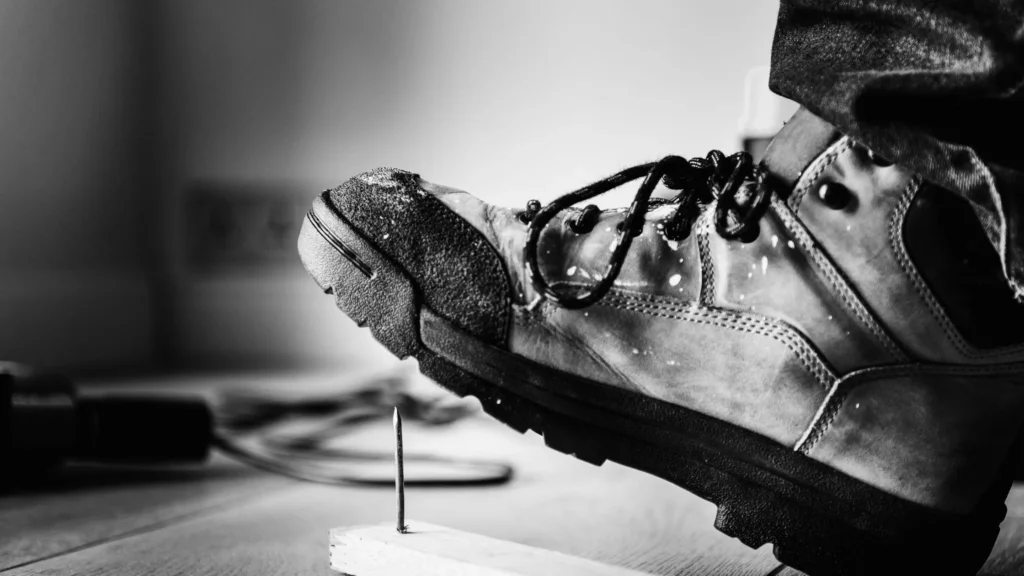
Not every construction accident happens because someone was reckless. Many occur simply because the right protective gear was absent at the wrong moment. A falling bolt. A grinder that slips. Dust that builds up quietly in a worker’s lungs over months. PPE Requirements for Construction Sites in UAE exist to address these moments before they turn into injuries.
Across Dubai, Abu Dhabi, Sharjah, and every other active project zone in the Emirates, construction workers move through hazardous conditions as part of their daily routine. Personal protective equipment is the final layer of defence when every other control falls short. For site managers, safety officers, and workers, knowing these requirements is the difference between a site that protects people and one that only looks like it does.
What Are the PPE Requirements for Construction Sites in UAE?
PPE Requirements for Construction Sites in UAE are the recognised standards that specify which protective equipment workers must wear when exposed to occupational hazards on active construction sites.
Site safety works in layers. Designers eliminate hazards where possible. Engineers install guards, barriers, and ventilation. Site managers create procedures and rotation systems. PPE is the last layer — it handles the risk that everything else could not remove. It is not a substitute for the others, but without it, the system is incomplete.
Standard baseline PPE requirements across UAE sites include:
- Safety helmets
- High-visibility vests
- Safety footwear
- Protective gloves
- Safety goggles
- Hearing protection
- Respiratory protection
- Fall protection equipment
Selection must match the task. A demolition worker needs different respiratory protection from a painter. A scaffolder needs different fall protection from an electrician on a ladder. Compliance is not about issuing equipment – it is about issuing the right equipment for what the worker is actually doing.
Why Are PPE Requirements for Construction Sites in UAE Mandatory?
PPE Requirements for Construction Sites in UAE are mandatory because construction is one of the most consistently dangerous industries in the world — and the injuries it produces are largely preventable.
The International Labour Organization places construction among the highest-risk sectors globally for workplace fatalities and serious injuries. In the UAE, large-scale projects operating on tight timelines create pressure that, without regulation, would regularly push safety to the back. The legal framework governing PPE Requirements for Construction Sites in UAE takes that decision out of the equation.
What mandatory PPE prevents in practice:
- Safety helmets absorb impact force from overhead drops before it reaches the skull
- Safety goggles block fragments moving faster than any human reflex can respond to
- Protective gloves reduce hand injuries, which make up a significant share of construction claims
- Respirators stop silica dust and demolition particulates from reaching lung tissue where they cause irreversible damage
- Full body harnesses distribute fall arrest forces across the torso, turning a potential fatality into a survivable event
Beyond worker safety, there is a direct business case. Contractors who allow PPE Requirements for Construction Sites in UAE to slip face regulatory penalties, project suspension, insurance consequences, and civil liability. A site built on genuine PPE compliance costs far less to operate than one that learns these lessons after an incident.
Which PPE Equipment Is Required on UAE Construction Sites?
Required equipment varies by task, but these categories appear across all UAE construction projects regardless of sector or scale:
|
PPE Type |
Purpose |
Common Applications |
|
Safety Helmet |
Protects the head from impact |
General site work |
|
Safety Goggles |
Shields the eyes from debris |
Cutting, grinding |
|
Face Shield |
Provides additional facial protection |
Welding, chemical handling |
|
High-Visibility Vest |
Improves worker visibility |
Roadworks and active sites |
|
Safety Gloves |
Protects hands from cuts and abrasions |
Material handling |
|
Safety Boots |
Prevents foot injuries |
Construction and excavation |
|
Ear Protection |
Reduces noise exposure |
Heavy equipment operation |
|
Respirators |
Filters harmful particles and dust |
Demolition and dusty environments |
|
Full Body Harness |
Protects against falls |
Work at height |
Every item must meet recognised certification standards. Uncertified PPE can look identical to tested equipment — the difference only becomes visible when the gear is put under real stress. By then, it is too late to make a different choice.
What UAE Regulations Govern PPE Requirements for Construction Sites?
PPE Requirements for Construction Sites in UAE are enforced by a combination of federal and emirate-level authorities, each with inspection powers and the ability to issue formal penalties.
Key regulatory bodies include:
- UAE Ministry of Human Resources and Emiratisation (MOHRE) — sets national labour protection standards and employer obligations
- Dubai Municipality — enforces construction health and safety compliance across all Dubai sites
- Abu Dhabi Occupational Safety and Health Center (OSHAD) — governs occupational safety requirements across Abu Dhabi’s construction sector
- Local civil defense authorities — oversee fire safety and emergency preparedness on site
Inspectors look beyond whether workers are wearing helmets. They check for documented risk assessments, signed PPE issue records, training logs, replacement procedures, and audit trails. Gaps in documentation are treated as gaps in compliance. If an incident occurs and the records are incomplete, the consequences are significantly more serious than if the paperwork is in order.
How Do Employers Comply With PPE Requirements for Construction Sites in UAE?
Compliance with PPE Requirements for Construction Sites in UAE requires an ongoing management process, not a one-time procurement decision.
Conduct task-specific risk assessments. Generic hazard evaluations are insufficient for high-risk activities. Each task — excavation, overhead work, confined-space entry, chemical handling — needs its own assessment that identifies the specific hazards present.
Select equipment that matches the risk. Procurement should follow assessment, not precede it. The target is gear rated for the identified hazard level, not the cheapest available option or whatever is already in the storage room.
Train workers properly. Issuing PPE without instruction reduces its effectiveness significantly. Workers need hands-on training covering when each item is required, how to fit and adjust it correctly, how to inspect it before use, and how to report damage. Training records must be kept and updated.
Supervise compliance on the ground. Physical site presence is the only way to catch misuse — a helmet worn on the back of the head, a respirator pulled down during a task, harness webbing that has been fraying for weeks. Supervision is not punitive; it is protective.
Replace damaged equipment without delay. Every piece of PPE has a service life. Cracked helmets, worn harness straps, degraded respirator seals must be removed from service the moment damage is identified. Replacement thresholds should be defined and applied consistently.
What Risks Arise When PPE Requirements for Construction Sites in UAE Are Ignored?
Ignoring PPE Requirements for Construction Sites in UAE puts workers, projects, and businesses at simultaneous risk.
Workers without protection face:
- Head trauma from falling objects or structural impact
- Eye injuries from grinding sparks, flying fragments, and chemical splatter
- Gradual hearing loss from prolonged machinery and tool noise
- Respiratory disease from chronic dust inhalation — a condition that develops slowly and has no reversal
- Hand and foot injuries from cuts, punctures, and crush events
- Falls from height, which remain the leading cause of fatal construction injuries worldwide
For the business, a serious incident typically triggers site suspension, regulatory investigation, insurance claims, civil proceedings, and lasting damage to the company’s safety record and tender position. The cost of proper PPE — measured against any one of these outcomes — is negligible.
How Should Construction Workers Maintain Their PPE Equipment?
PPE that is not maintained loses its protective capacity without always showing visible signs of failure. Pre-shift inspection is the habit that catches problems before they matter.
Workers should check helmets for shell cracks and cradle wear. Harnesses need a webbing inspection — looking for cuts, abrasion, or chemical discolouration — plus a check of every buckle and connector. Goggles with heavily scratched lenses compromise both vision and protection. Respirators require a seal check and filter assessment at the start of every shift.
Good maintenance practices:
- Clean equipment using only manufacturer-approved methods — incorrect products degrade materials invisibly
- Store PPE away from heat, UV exposure, and chemical contamination
- Remove any item from service the moment damage is found, not at the end of the shift
- Never share respiratory equipment without full sanitisation between users
- Log all defective gear through the site’s formal system so stock and condition are tracked accurately
Site managers should schedule regular equipment audits — checking stock levels, filter cartridge expiry dates, and overall team gear condition — beyond individual pre-shift checks.
What PPE Standards Should Construction Companies Follow in UAE?
Certified PPE has been independently tested against defined performance benchmarks. That certification is what separates equipment that actually works from equipment that merely looks like it should.
UAE construction companies should source PPE certified to these internationally recognised standards:
|
PPE Category |
Relevant Standards |
|
Safety Helmets |
EN 397 |
|
Safety Footwear |
EN ISO 20345 |
|
High-Visibility Clothing |
EN ISO 20471 |
|
Eye Protection |
EN 166 |
|
Respiratory Protection |
EN 149 |
|
Fall Protection |
EN 361 |
Certification documentation should be available at the point of purchase and kept on file. Choosing uncertified equipment to reduce cost shifts the risk directly onto every worker who relies on it — and onto the employer who made that decision.
Where Can Businesses Buy Certified PPE for Construction Sites in UAE?
Reliable PPE procurement depends on supplier credibility as much as product availability. A strong supplier provides certification documentation upfront, advises on the correct specification for specific site conditions, and supports replacement when equipment fails or reaches end of service life.
Key supplier evaluation criteria for UAE construction projects:
- Verified certifications for every product in the range
- Proven experience supplying UAE construction and industrial sectors
- Broad enough range to cover all PPE categories from one source
- Responsive technical support for specification and compliance questions
- Clear warranty, replacement, and bulk procurement policies
For companies looking for certified construction safety equipment, visit Safe Gear UAE to explore a wide range of personal protective equipment designed for construction, industrial, and workplace safety applications across the UAE.
Conclusion
Construction sites in the UAE carry a risk that design and planning reduce but never fully eliminate. PPE Requirements for Construction Sites in UAE address what remains – the hazards that fall through every other layer of protection. Safety helmets, protective footwear, respiratory equipment, eye protection, and fall protection systems each guard against specific injuries that workers across Dubai, Abu Dhabi, Sharjah, and the wider Emirates encounter as part of their daily work.
Meeting PPE Requirements for Construction Sites in UAE consistently — through accurate risk assessment, certified equipment, genuine training, and active supervision — protects workers, keeps projects running, and defines what a professionally managed construction site actually looks like.
FAQs
What is the most important PPE on a construction site?
Safety helmets are considered the most critical item because overhead hazards are present across nearly every construction task. UAE site standards also establish safety boots and high-visibility clothing as universal baseline requirements for anyone on an active site.
Is PPE mandatory on construction sites in the UAE?
Yes. UAE workplace safety law requires employers to provide appropriate personal protective equipment wherever occupational hazards exist. MOHRE, Dubai Municipality, OSHAD, and civil defense authorities enforce this through site inspections and issue formal penalties for non-compliance.
How often should PPE be replaced?
Replacement is driven by condition and service life, not a fixed schedule. Any item showing physical damage must be replaced immediately. Respirator cartridges carry expiry dates and must be changed accordingly. Helmets that have sustained a significant impact should be replaced at once, even without visible cracking.
Who is responsible for providing PPE in the UAE?
Employers are legally responsible for supplying suitable PPE, covering the cost, training workers on correct use, and maintaining a replacement process for gear that is no longer serviceable.
What happens if workers do not wear PPE?
Workers face direct, unmitigated exposure to site hazards. Employers face regulatory violations, potential site suspension, and substantially increased legal liability if an injury results from unprotected work.